The Last Straw: How Disposable Convenience Fuels Power and Profit
I’ve been seeing this meme making the rounds on social media lately.
You’ve probably seen it too:
“Me Giving Up Plastic Straws;
Meanwhile the Government:”



Don’t get me wrong—the meme is funny.
I support criticism of systems over the individual responsibility narrative any day. Our lifestyle changes are meaningless compared to the scale of industrial pollution and social damage inflicted by war. But the meme also pushes another quiet narrative that deserves some scrutiny:
That our individual choices do not matter at all.
But we should not use this moment to completely dismiss our own impact.
“No ethical consumption under Capitalism.”
This mantra reflects the idea that modern supply chains are built upon exploitation, and even responsible consumption often enriches bad actors who shape the system in their favor. One-Dimensional Man by Herbert Marcuse
That does not mean that all consumption is morally identical. We still make choices within this system, and some carry greater consequences than others. Economists and the Public by William H. Hutt
“We become just by doing just acts, temperate by doing temperate acts, brave by doing brave acts.”
Resolving to passivity and acceptance in this abusive abnormal situation is sacrificing not only our virtue, but all of our futures. Nicomachean Ethics by Aristotle
What’s the Problem with Plastic?
Plastic waste doesn’t simply disappear. It breaks down into smaller and smaller fragments called microplastics.
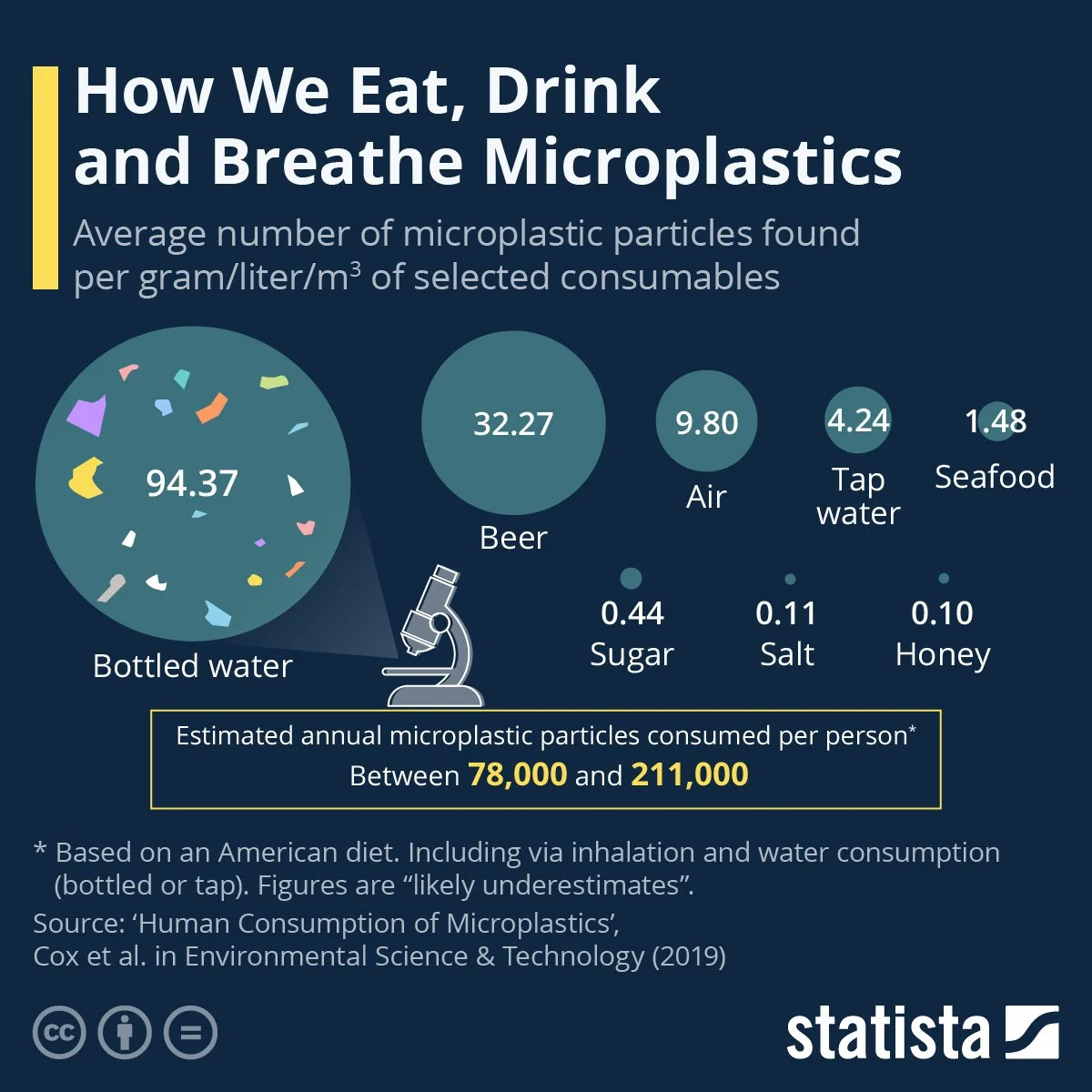
by Keiran D. Cox, et al.
These particles can become small enough to interact with biological systems and even cross the human blood-brain barrier. They can also act as chemical carriers, binding with pollutants including PFAS. Discovery and Quantification of Plastic Particle Pollution in Human Blood by Heather A. Leslie, et al.
PFAS are a class of industrial chemicals known as “forever chemicals.” They are extremely persistent, do not break down in the environment, and accumulate in human bodies over time. CDC PFAS Monitoring Program
“Most people in the United States have been exposed to PFAS and have it in their blood. ”
Microplastics and PFAS are increasingly linked to cancers, degenerative diseases, and autoimmune disorders plaguing modern society. It is increasingly plausible that microplastics and PFAS are the leaded gasoline scandal of our generation.
The most disturbing discovery, however, is how widespread contamination has become. Microplastics have been detected in human blood, the placentas of unborn fetuses, and even the first stool of newborn babies. Studies now estimate that over 99% of humans have detectable PFAS in their blood. NHANES Biomonitoring Program
Human beings are now born into a chemically contaminated environment.
We are, quite literally, born pre-polluted.
Is the "eco" straw any better?
Not exactly.
Skip the nano-plastics and the blood-brain barrier entirely. Many paper straws contain PFAS coatings, meaning you may be drinking them directly. Food Additives & Contaminants by Thimo Groffen, et al.
These substances are used to prevent paper from dissolving in liquids. These chemicals are extremely persistent and accumulate in the human body. Your body.
And yet the conversation somehow stops at the straw itself.
The “green straw” becomes the perfect distraction. It makes us feel like we’ve done our part while the same billionaires continue to profit from the same industries that fuel global instability.
We are not going to fill the gaping void in our souls with a different disposable item. We should be reconsidering convenience and “fast” culture altogether.
The Little Devil—How Bread Clips Funded an Ideology
To understand how small products can support large political movements, we can look at the story of Floyd Paxton.
Paxton founded the company, Kwik Lok, to manufacture and distribute his patented technology: the bread clip. Kwik Lok became one of the dominant global suppliers of these tiny plastic fasteners. Paxton controlled a large share of the global supply of this seemingly trivial item.
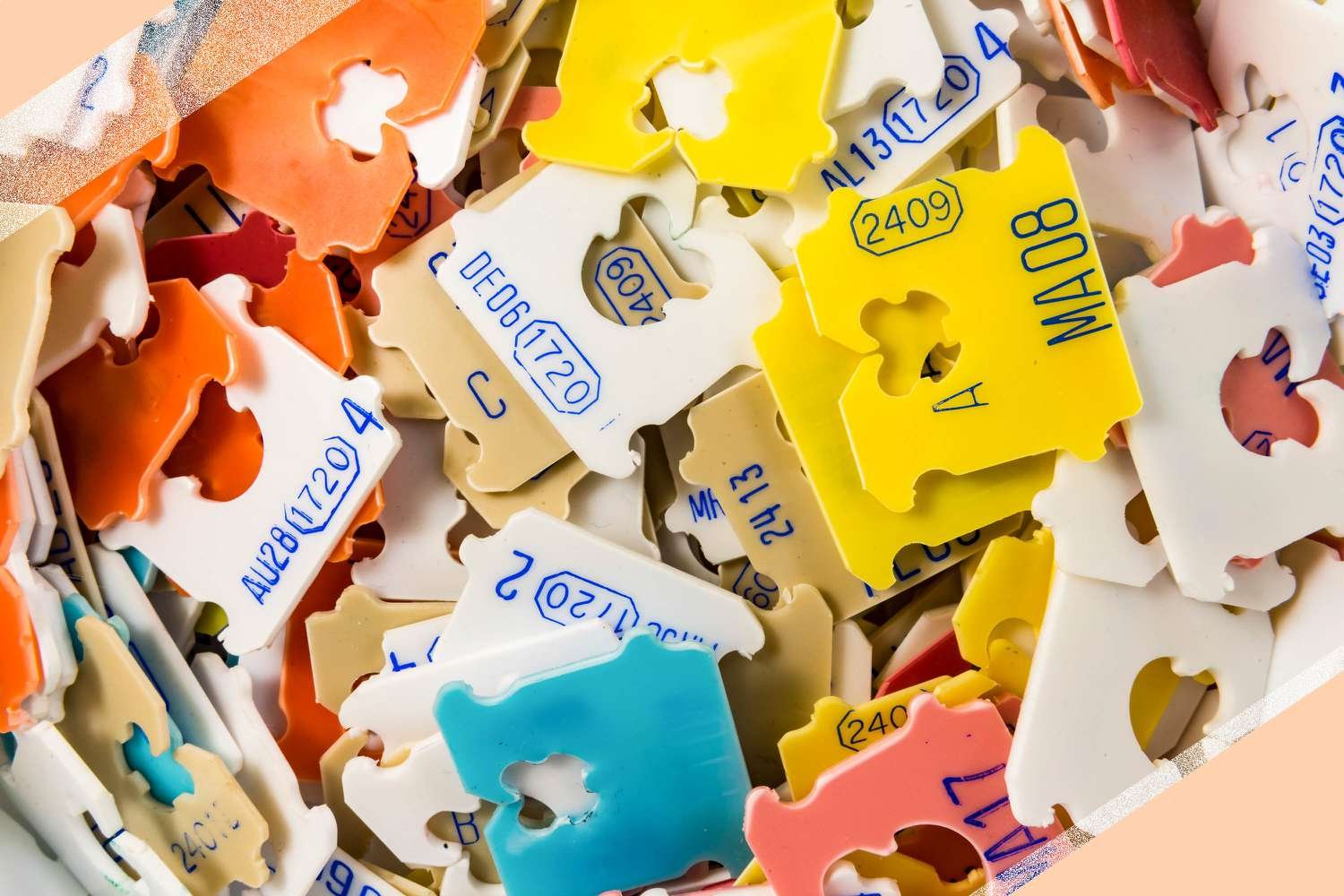
The Bread Clip
Fuel for an Ideology
If the bread tie story ended here, it would not be much of a story.
But, Paxton wasn't just a businessman.
He was also deeply involved in ultra-conservative politics.
As a national board member of the conservative think-tank, John Birch Society, Paxton used his bread-clip fortune to help fund a worldview of domination and ultra-conservatism, a movement that is fundamentally affecting the world today. Paxton proved that even a piece of plastic smaller than a thumbnail could be leveraged into a global political weapon.
The Big Devil—The Plastic Industry
Paxton was an early example of how private wealth built on trivial products can influence political movements. However, the plastic straw story is not really about manufacturers like Paxton. It is about the even larger industries that make the plastic itself.
Single-use plastics like bread ties, straws, and plastic bags are materials derived from petroleum and natural gas. That means every disposable straw ultimately begins in the fossil-fuel economy. And some of the most powerful figures in that economy sit far upstream from the final product.
Companies like ExxonMobil, Chevron, and Saudi Aramco extract the oil and natural gas. Meanwhile, Koch Industries, Dow, and LyondellBasell operate major businesses in oil refining, pipelines, and petrochemicals, and produce chemical intermediates and polymers that help supply the plastics manufacturing sector.
These companies have also played a major role in shaping the politics surrounding petroleum extraction for decades. The scale of that influence dwarfs the reach of Paxton’s bread clip empire. And it operates with a far more powerful political engine behind it. Merchants of Doubt by Naomi Oreskes and Erik M. Conway
The strategy is protecting the industrial ecosystem that makes the product possible. Profits flow into sophisticated policy-shaping networks that reduce environmental regulation, lower corporate taxation, and expand fossil-fuel development.
They have been a primary force in stalling international climate agreements and lobbying for the wholesale deregulation of the fossil fuel industry. The very industry that provides the raw petroleum for every plastic straw and every bread clip sold. Center for Responsive Politics, Open Secrets Database
The final straw.
We must consume to survive.
But we do have the privilege of giving up unnecessary waste—and a straw is the perfect example. For most people, a straw is not a necessity. It is simply a disposable convenience.
It raises the simple question:
If we know something is unnecessary and harmful, why do we defend our “right” to use it so aggressively?
Why does the suggestion of removing the plastic straw from the equation altogether, to some people, feel like an attack on their personal freedom? A straw has never been a life-or-death situation for me, and for most people it never will be. The truth is, convenience culture has trained us to view every small comfort as a right. Hedonic Relativism and Planning the Good Society by Phillip Brickman and Donald T. Campbell
We don’t tend to look at other products like this. Huawei. Kinder Surprise. Accepting regulation around objects is not unfamiliar to us. So why is this particular object so symbolic to personal liberty? The answer lies in who stands to profit and who is harmed.
The people who profit from these conveniences have convinced you that restricting them is an attack on your freedom. Every disposable convenience exists inside a vast industrial system designed to produce, distribute, and extract profit from it. Succumbing to these conveniences directly results in undermining your individual autonomy and personal health. One-Dimensional Man by Herbert Marcuse
We become willing participants in our own demise.
War, Technology, & Influence Today
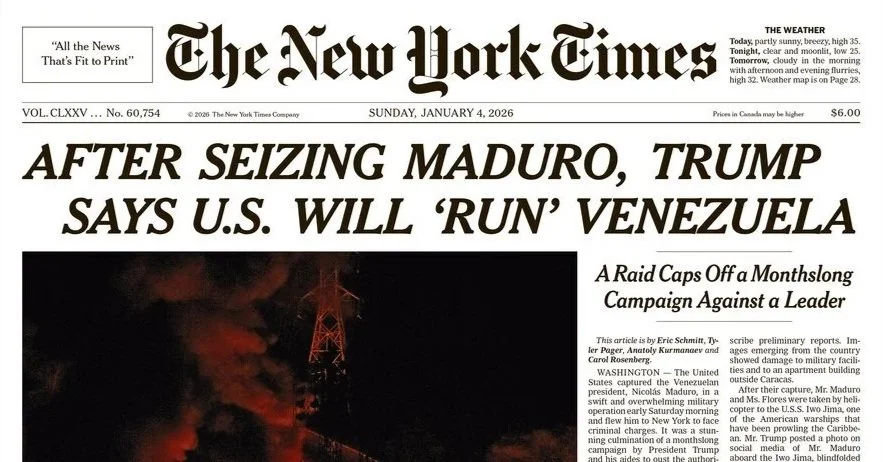
January 2026, U.S. forces conducted a large-scale strike and special-forces raid in Venezuela that captured President Nicolás Maduro and flew him to the United States. International law experts and several governments described the action as a violation of Venezuelan sovereignty and the UN Charter.
February 2026, the United States and Israel launched a large-scale airstrike campaign across Iran that targeted military infrastructure and senior leadership. One of the first strikes hit a compound in Tehran and killed Supreme Leader Ali Khamenei, along with several other top Iranian officials. The operation was part of a broader campaign, reportedly involving hundreds of strikes, to degrade Iran’s missile forces, air defenses, and nuclear-related facilities. Iran retaliated with missile and drone attacks against U.S. bases and regional targets, escalating the conflict across the Middle East.
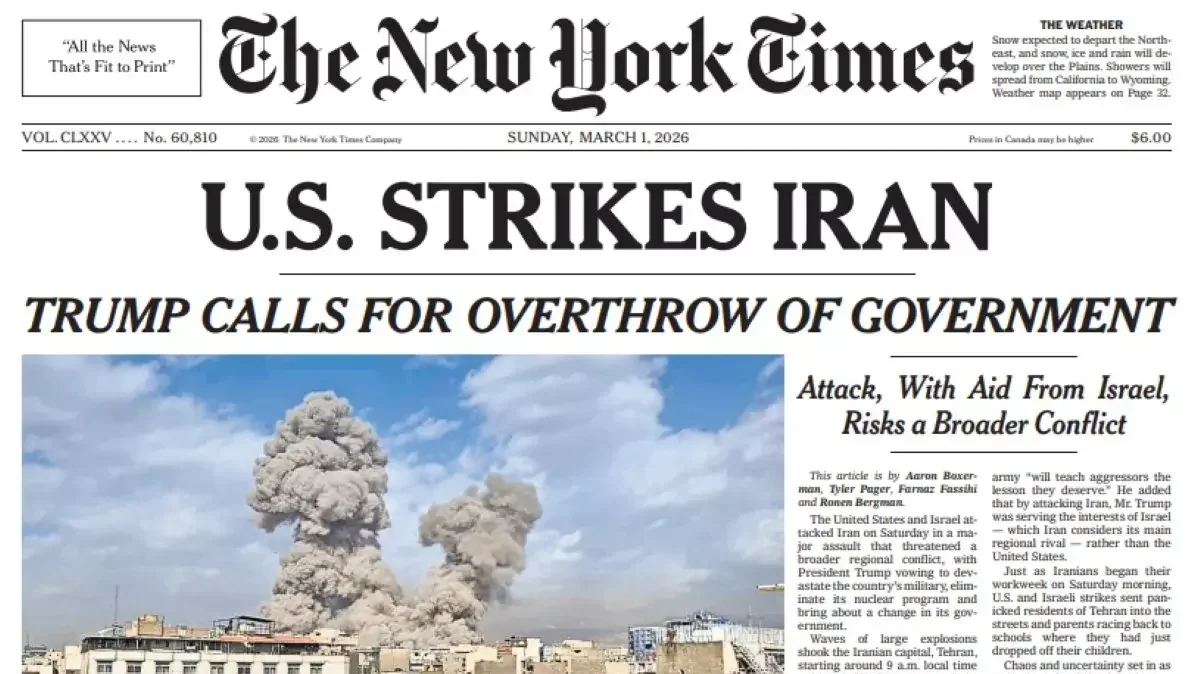
It does not take much to see the connection between two seemingly unrelated campaigns on separate continents, both justified by flimsy premises. The golden string tying them together is oil reserves. Oil reserves that fuel “defense” technology and precursors for plastic production. The Prize: The Epic Quest for Oil, Money, and Power by Daniel Yergin
This closed-loop system of influence far exceeds protecting business interests. The strikes in Tehran and the extraction of Maduro are the high-definition result of the same lobbying system that keeps us sucking down PFAS through straws.
In this light, every plastic straw becomes a tiny, hollow monument to a political machine that prioritizes industrial dominance over the global impact of its own production and waste.
This is not a conspiracy.
This is our current political and economic ecosystem.
And while a plastic straw may seem insignificant, it is still part of that ecosystem. One that converts fossil fuels into disposable products, disposable products into financial power, and financial power into political influence and global dominance.
A straw may seem insignificant.
Multiply that object by billions, and the result is an enormous stream of wealth flowing into the very industries shaping global politics.
Which brings us back to the meme.
No, giving up a straw will not stop a war.
But pretending that our consumption has zero relationship to the systems we criticize is naive.
I’m not asking you to stop using a straw.
I am asking you to reconsider how you engage with consumption entirely.
We absolutely live within the system. A golden cage—where we serve as the poorly compensated production wing of a massive corporate monster. We also serve as the primary market for their snake oil. We cannot forget that we are small, but important, parts of a larger system.
A few men, who can be named, real people, stand to profit off of your entire existence.
Every sip. Every scroll. Every like.
Every birthday, every wedding, every funeral.
Every quiet night alone.
Every heart-wrenching sob and every gut-busting laugh.
Every moment of your life is another dollar to them.
That is truly how they see you.
Systems shape our behavior. But our behavior still feeds the system. Sometimes the most revealing political symbol isn’t a missile hitting a mosque or a prewritten speech. Sometimes it’s what you’re willing to do about being the smallest piece of plastic on the table.
You are the final straw.
Systems rarely change because of a single symbolic issue. They change when cultural pressure builds until governments and industries can no longer ignore it.
In the 1980s, scientists discovered that chemicals used in aerosol sprays and refrigeration were destroying the ozone layer. Public pressure grew quickly as the science spread. Governments eventually responded with the Montreal Protocol in 1987, an international agreement that phased out more than 99% of ozone-depleting substances worldwide. Today, the ozone layer is slowly recovering, without it, life on Earth could not survive. The Montreal Protocol
Smaller policies show the same pattern. In 2002, Ireland introduced a €0.15 tax on disposable plastic bags. Plastic bag usage fell by about 90% within weeks, removing billions of bags from circulation each year and dramatically reducing one of the most common forms of everyday plastic waste. Institute for European Environmental Policy
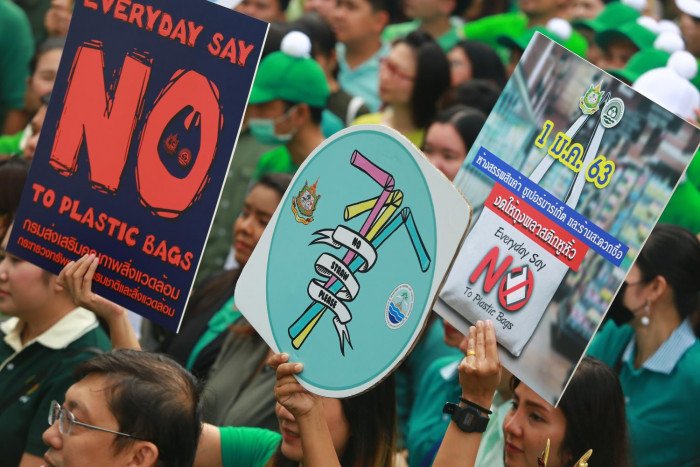
These examples reveal a lot about how we behave collectively. When millions of people change their behavior at once, those choices accumulate into cultural pressure. Cultural pressure becomes economic pressure. Economic pressure eventually becomes political and social change.
You do not need to wait for government action to give up conveniences that become nuisances the moment they are trashed. You can get ahead of the legislation. Carry your own bags to the store, say no to the straw at dinner, use refillable water bottles. Annoy your friends every time they slip and cave to absurd convenience.
The same systems that produce disposable plastics also shape labor conditions, public health, energy policy, and global inequality. Changing this system does not mean eliminating all plastic tomorrow. It means taking a responsible look at your consumption habits and making small adjustments for your own health and happiness. Any shift in that system often begins with ordinary people refusing to treat its consequences as normal.
It is not normal.
The culture war over straws is not a sign that we are losing the plot.
It is a signal that the system is grappling to maintain its legitimacy.
Resources
One-Dimensional Man by Herbert Marcuse
Economists and the Public by William H. Hutt
Human Consumption of Microplastics by Keiran D. Cox, et al.
Discovery and Quantification of Plastic Particle Pollution in Human Blood by Heather A. Leslie, et al.
Food Additives & Contaminants by Thimo Groffen, et al.
Hedonic Relativism and Planning the Good Society by Phillip Brickman and Donald T. Campbell
Merchants of Doubt by Naomi Oreskes and Erik M. Conway
The Prize: The Epic Quest for Oil, Money, and Power by Daniel Yergin
Nicomachean Ethics by Aristotle